
Refugees Make America Great

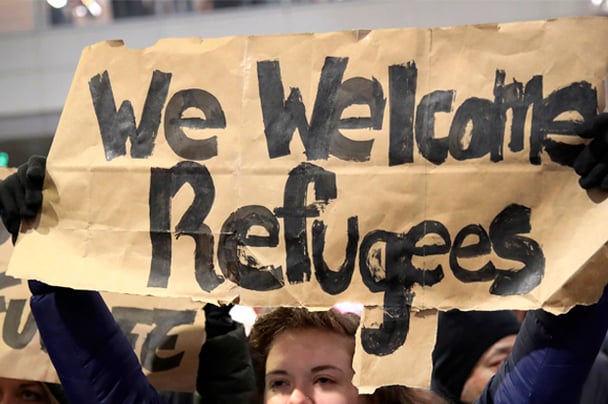
Earlier this week, President Trump expanded his travel ban to an additional five countries, bringing the total number of affected countries to 39. In an unprecedented move, the administration has paused all visas for Afghan nationals, most of whom had to flee the country because of their assistance for the U.S. government and military.
This is not an accident. In a speech following the killing of two National Guardsmen, Trump promised a “permanent pause on Third World migration.” Eight of the ten top refugee-sending countries are included on the President’s travel ban. The private sector should realize what the administration seems unwilling to recognize: refugees help make America great.
Fleeing war and persecution, refugees often arrive with little but the proverbial clothes on their backs. In the first five years after arrival, their median household incomes stand at half of that of natives. But their economic trajectory is astounding. After spending more than twenty years in the country, refugees earn more than immigrants and native-born citizens alike.
In their home countries, many are thwarted by systemic corruption, oppression, and war. The United States offers them a fresh start to rebuild their lives and their businesses. In many ways, these people are born entrepreneurs: young people that have overcome persecution and violence don’t need an expensive degree to learn traits like resilience, grit, and adaptability.
As a consequence, refugees are more likely to start a business than both natives and other immigrants. They have higher rates of employment and higher lifetime earnings than native-born Americans. According to a government study, refugees and asylees contributed more than $580 billion in tax revenue over fifteen years, far exceeding the cost of public services they received. In short, refugees are a boon rather than a burden on the economy.
Yet too often refugees continue to end up in low-paying occupations.As CEO of Ventures Beyond Borders, I have worked with former members of Afghanistan’s National Security Council and multi-million dollar business owners who now struggle to make ends meet. This is not for lack of talent— refugees’ education levels stand at similar levels as native-born Americans .Many Afghan refugees are former interpreters, military members, and medical staff. But when they come to the United States, they have to rebuild their lives from scratch.
In particular, venture capitalists continue to overlook the economic potential of refugees. While over half of U.S. unicorns were started by immigrants, refugee-sending countries remain vastly underrepresented. Refugees, more so than other immigrants, lack two of the key ingredients of the Silicon Valley recipe of success: social and financial capital.
In venture capital, success is often a function of who you know rather than what you know. Elon Musk, Jeff Bezos, Bill Gates, and Mark Zuckerberg have one thing in common: their parents were extraordinarily wealthy. Studies have found that parental income is the number one determinant of success for startup founders. Most entrepreneurs are white, male, and rich.
More than that, successful entrepreneurs tend to have access to a vast network of elite universities and accelerators. Refugees are often stuck looking from the outside in. This is true even beyond the elusive realm of venture capital: business loans are determined based on existing credit scores, creating a Catch-22 for aspiring refugee entrepreneurs.
It is time for the private sector to step up: employers and investors should start treating a refugee background as an asset rather than a liability. Impact-focused companies with ESG objectives can invest in refugee-owned businesses, while philanthropic organizations may choose to allocate funds toward mission-aligned programs. Financial institutions could provide refugees with more accessible loan options, offering terms more favorable than those of traditional banks.
Over the past decade, forced displacement has soared from 51 million to 117 million globally. But rising even faster is the rate of refugee entrepreneurship. Refugees are eager to build businesses, employ others, and uplift their communities. Cities like Buffalo and Fargo have credited refugee newcomers with stabilizing neighborhoods and reversing demographic decline.
Previous restrictions on refugee admissions cost the U.S. economy an estimated $9 billion per year. Donald Trump’s recent travel ban will be no different. Amidst a decline in government funding, Wall Street and Silicon Valley have the opportunity to take on the baton. Investing in refugees isn’t just the right thing to do, it is also the smart thing to do.
Johannes Lang is the founder of Ventures Beyond Borders, a global accelerator and nonprofit fund for refugee founders.